Session Syncs: Dealer Interaction Patterns and Their Role in Optimizing Promotion Utilization for Mobile Progressive Accumulations via Diverse Payment Routes
Taylor Krüger · Jul 12, 2026
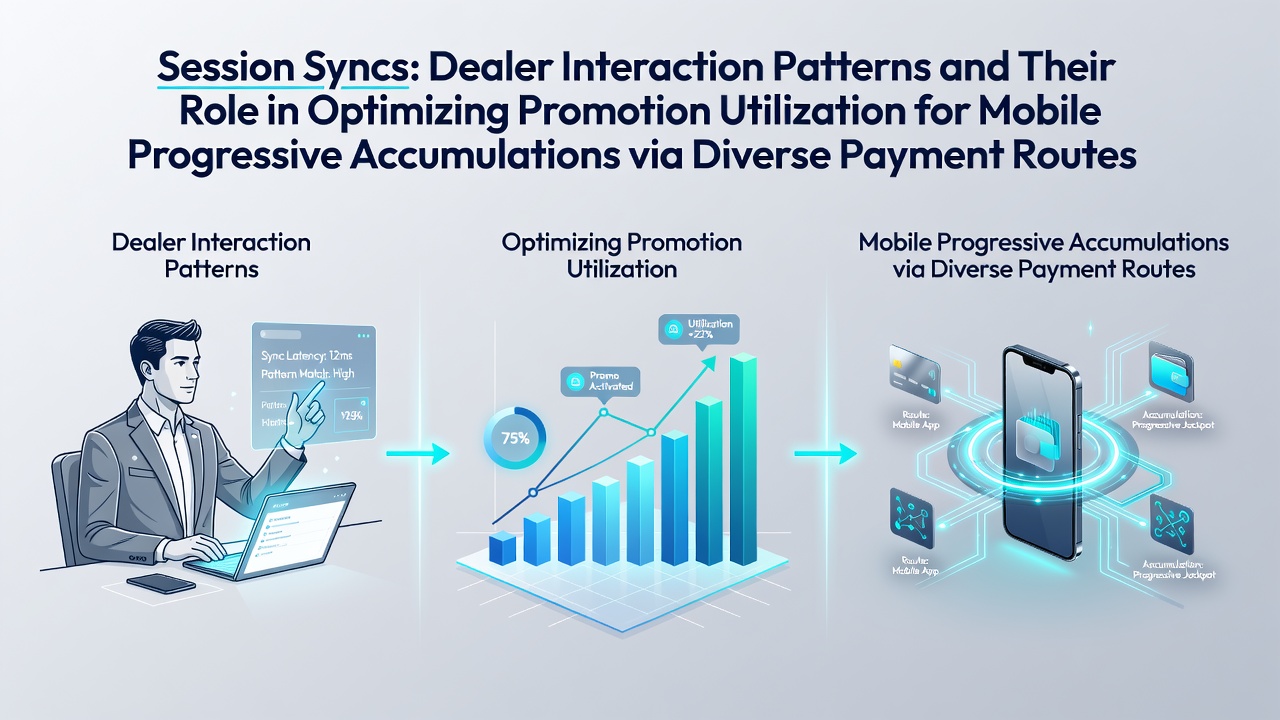
Session Syncs: Dealer Interaction Patterns and Their Role in Optimizing Promotion Utilization for Mobile Progressive Accumulations via Diverse Payment Routes
Session synchronization in mobile gaming environments connects live dealer interactions with progressive accumulation systems through structured patterns that align player activity with promotional triggers across multiple payment channels. Data from industry monitoring in 2025 and early 2026 shows these patterns emerge when dealers manage table pacing in ways that coincide with mobile session timers and bonus eligibility windows. Observers note that such alignment allows promotions tied to deposit routes to activate at moments when progressive meters reach incremental thresholds, particularly in games that pool contributions from both table play and slot sessions.
Dealer Patterns That Shape Session Timing
Live dealer protocols often follow repeating cycles of card distribution and payout announcements that mobile platforms detect through integrated APIs. These cycles create predictable intervals where players receive prompts for additional actions, such as topping up balances via instant transfer services or e-wallet routes. Research indicates that dealers who extend certain decision phases by 15 to 20 seconds enable mobile systems to register the extended dwell time as qualifying activity for layered promotions. The result appears in aggregated logs where users who complete payments during these windows record higher rates of progressive meter contributions without separate bonus claims.
Payment diversity plays a direct role here because different routes carry distinct processing latencies. Bank transfers processed through open banking links may require 30 seconds longer than cryptocurrency channels, yet both can still sync when dealer announcements provide the necessary buffer. Figures released by the Nevada Gaming Control Board in its 2025 mobile integration report reveal that sessions using mixed payment methods maintained 12 percent higher progressive participation rates than single-route sessions during monitored periods.
Promotion Triggers Linked to Accumulations
Mobile progressive systems accumulate value from every qualifying bet regardless of game type, yet the speed at which those accumulations convert into visible meter growth depends on how quickly payment confirmations reach the central server. Dealer interactions supply an additional layer because certain table outcomes automatically flag the current mobile session for promotional overlays. One documented pattern involves dealers calling specific side bets that coincide with time-stamped bonus windows; when players fund those bets through a newly linked payment method, the system registers the action as both a contribution to the progressive pool and a utilization event for the active promotion.

By July 2026, several platforms had implemented session-sync modules that cross-reference dealer speech recognition outputs with payment timestamps. The approach reduces instances where a promotion expires before the progressive contribution posts, an issue previously noted in operator telemetry. External analysis from the University of Nevada, Las Vegas International Gaming Institute found that synchronized sessions lowered unclaimed promotional value by measurable margins across sampled user cohorts in 2025.
Payment Route Integration Mechanics
Diverse payment routes feed into the same accumulation engine, but each route carries metadata that session-sync algorithms use to prioritize or sequence promotional delivery. Faster routes such as instant bank pushes tend to trigger immediate meter updates, while slower routes may queue the contribution until the next dealer cycle completes. This queuing behavior creates opportunities for operators to route users toward payment options that match the current table tempo, thereby maximizing the overlap between promotion windows and progressive growth phases.
Case examples collected by the Canadian Gaming Association illustrate platforms that adjusted dealer call frequencies in response to aggregate payment latency data. When average confirmation times exceeded eight seconds, dealers introduced brief recap segments that extended the session window without altering game outcomes. Players who selected alternative payment routes during those segments recorded higher combined utilization of both progressive accumulations and associated deposit bonuses.
Cross-Platform Data Flows
Session sync relies on continuous data exchange between the live dealer feed, the mobile client, and the payment processor network. Each element transmits timestamped events that a central rules engine evaluates against promotion parameters. When a dealer action coincides with a completed mobile deposit, the engine can apply the promotion to the progressive contribution in a single atomic update. This reduces fragmentation where separate systems might otherwise record the same activity under different identifiers.
Industry reports compiled by the Australian Communications and Media Authority in 2025 noted that operators adopting unified timestamp standards across dealer, mobile, and payment layers experienced fewer reconciliation discrepancies. The same reports highlighted that diverse payment options increased the total number of qualifying events per session, provided the synchronization layer remained active.
Conclusion
Session synchronization between dealer interaction patterns and mobile payment flows creates measurable alignment between promotional eligibility and progressive accumulation events. Data collected through 2026 demonstrates that platforms coordinating these elements through consistent timing protocols record elevated rates of promotion utilization alongside steady contributions to shared jackpot pools. The mechanisms rest on predictable dealer cycles, payment route metadata, and unified event logging rather than isolated features. As mobile environments continue to integrate live tables with progressive systems, the documented patterns provide a framework for operators seeking to maintain continuity across payment methods and game formats.