Mapping Intersections Between Table Dynamics and Accumulator Growth via Optimized Digital Transfers and Structured Incentive Layers
Erik Wolf · Jun 28, 2026
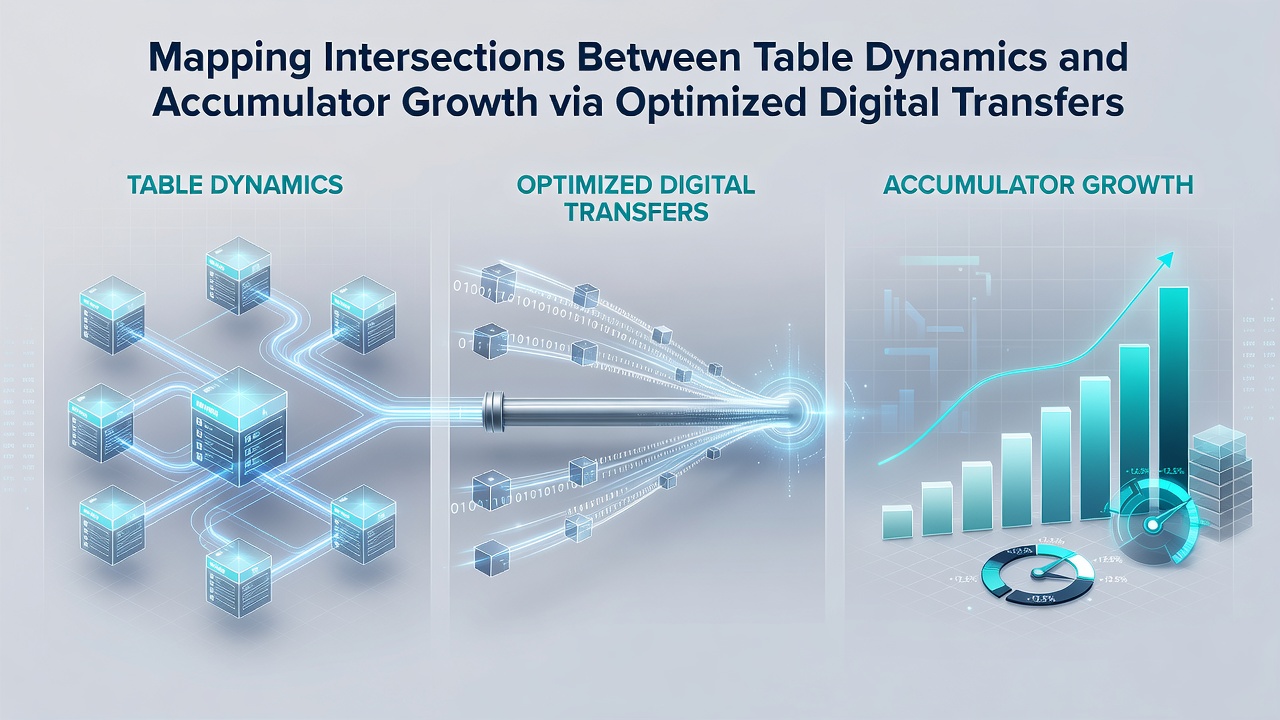
Mapping Intersections Between Table Dynamics and Accumulator Growth via Optimized Digital Transfers and Structured Incentive Layers
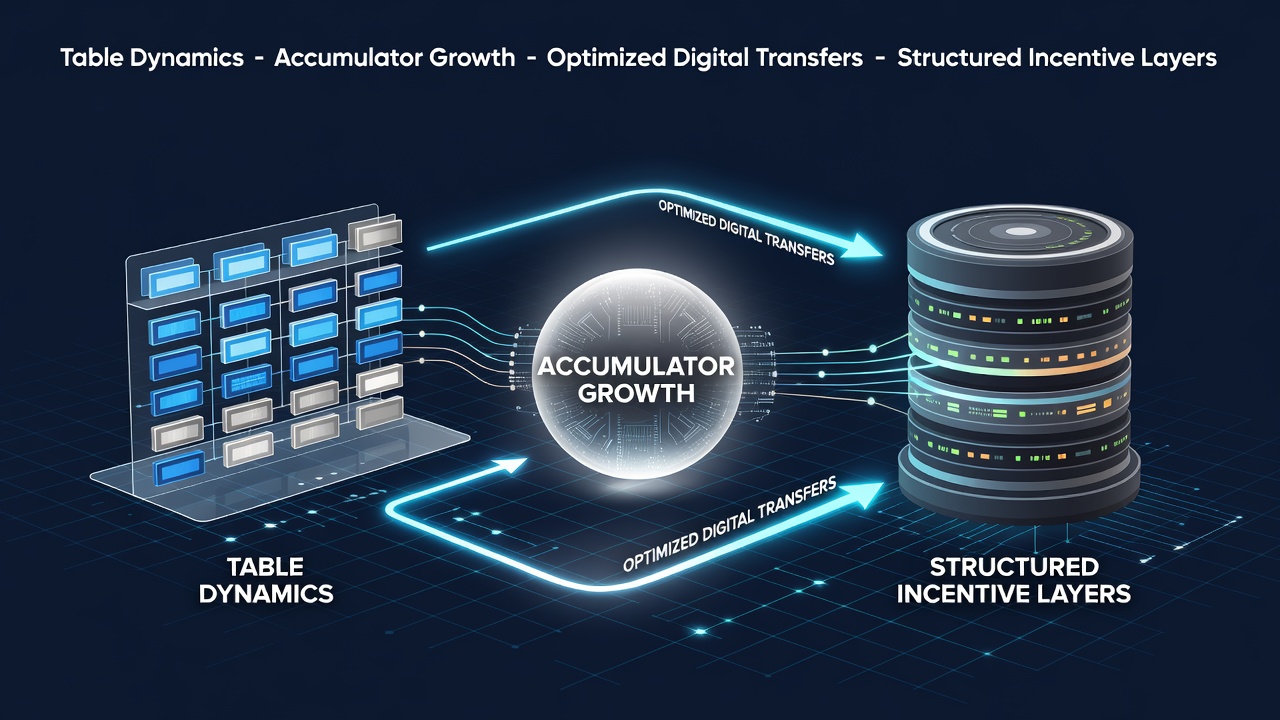
Table dynamics in digital gaming environments connect with accumulator systems through specific operational pathways that rely on real-time data exchanges and rule-based progressions. These connections form when live dealer protocols feed into shared prize pools while payment rails handle instant value movements between player accounts and central ledgers. Structured incentive layers sit at the junction points where bonus triggers align with table outcomes to adjust contribution rates toward growing accumulators.
Core Components of Table Dynamics in Accumulator Systems
Live table interfaces generate outcome sequences that operators route into accumulator calculations using standardized contribution percentages. Each hand or spin outcome carries metadata that determines whether it qualifies for pool increments. Digital transfer layers then move verified funds across segregated accounts while preserving audit trails required by oversight bodies such as the Nevada Gaming Control Board. Incentive structures layer on top through conditional multipliers that activate only after certain table milestones are met, creating feedback loops that accelerate pool growth during peak activity windows.
Observers note that these intersections become measurable when transaction timestamps sync with table result logs. Data from platform audits show that optimized transfer speeds reduce latency between a qualifying table event and its corresponding accumulator update, allowing pools to reflect new contributions within seconds rather than minutes. Structured incentives, meanwhile, introduce tiered eligibility rules that reward consistent table participation with enhanced contribution rates, effectively mapping player behavior patterns directly onto pool expansion curves.
Digital Transfer Optimization and Its Role in Growth Mapping
Payment infrastructure improvements focus on reducing friction at the point where table results convert into accumulator credits. Systems that employ instant settlement protocols allow operators to allocate portions of each wager almost immediately, which in turn supports higher-frequency updates to visible jackpot displays. Research from the Canadian Centre for Gaming Research indicates that platforms utilizing optimized digital rails record measurable increases in accumulator velocity during high-volume table sessions.
These transfers also carry embedded identifiers that link specific incentive layers to individual player accounts. When a structured reward activates, the system recalculates the contribution coefficient for subsequent table actions, creating dynamic adjustment points along the growth trajectory. Industry reports document that such mappings allow operators to forecast pool sizes with greater precision, particularly when data streams from multiple table variants converge into a single accumulator.
Structured Incentive Layers as Mapping Coordinates
Incentive architectures function as coordinate systems that position player actions relative to accumulator thresholds. Each layer defines entry conditions, contribution multipliers, and expiration parameters that operators encode into the same backend that manages table outcomes and transfer confirmations. According to data released in June 2026 by European gaming analytics consortia, platforms that aligned incentive triggers with table result frequencies experienced more consistent accumulator growth patterns across both peak and off-peak periods.
The mapping becomes visible when incentive activations coincide with optimized transfer events. A table outcome that meets an incentive criterion can trigger an immediate fund movement, which simultaneously increments the accumulator while updating the player's eligibility status for the next layer. This creates traceable vectors that show how individual table decisions influence overall pool trajectories without requiring separate reporting systems.
Integration Patterns Across Multiple Table Variants
Different table formats contribute to accumulators through distinct contribution pathways that operators reconcile using unified digital ledgers. Blackjack side bets, roulette number groupings, and poker hand rankings each carry unique weighting factors that feed into shared pools once digital transfers clear. Structured incentives normalize these differences by applying standardized multipliers that convert varied table outputs into comparable accumulator units.
Platform logs reveal that synchronization between table dynamics and accumulator updates improves when payment gateways incorporate real-time validation checks. These checks confirm that both the wager and any attached incentive have processed correctly before the system records the contribution. Such validation steps reduce discrepancies that previously appeared when table results and fund movements were handled through separate pipelines.
Conclusion
The intersections between table dynamics and accumulator growth emerge most clearly when optimized digital transfers and structured incentive layers operate as coordinated components within a single operational framework. Data streams from table outcomes, payment confirmations, and incentive activations combine to produce measurable growth patterns that operators can track across extended periods. Continued refinement of these mapping mechanisms supports more accurate modeling of how individual table interactions scale into larger prize structures.