Charting Funding Velocity Impacts on Tiered Incentive Triggers Across Portable Accumulator Formats with Real-Time Host Integrations
Erik Wolf · Jun 21, 2026
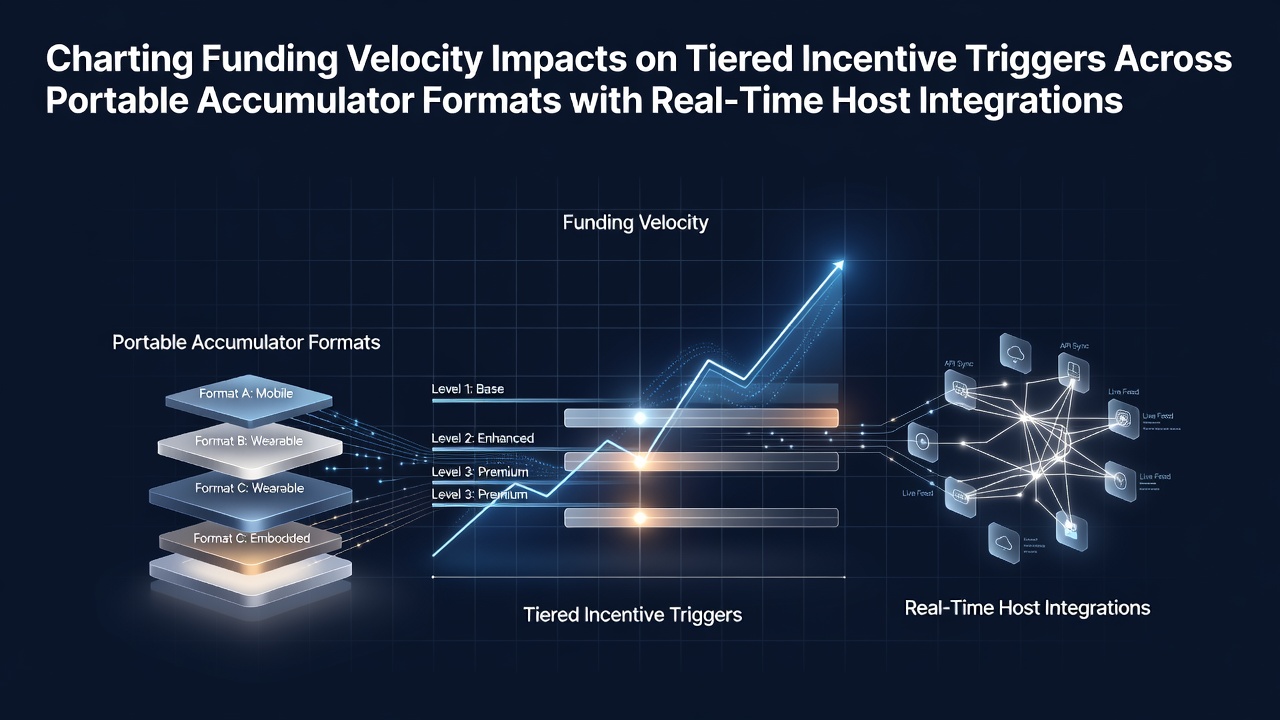
Charting Funding Velocity Impacts on Tiered Incentive Triggers Across Portable Accumulator Formats with Real-Time Host Integrations
Funding velocity refers to the rate at which deposits and transfers move through digital payment channels into accumulator systems, and this metric directly influences when players unlock successive incentive tiers in portable formats. Real-time host integrations connect mobile applications to backend processors so that each transaction registers instantly and updates accumulator balances without delay. Observers note that platforms using these integrations track velocity in milliseconds, allowing tier triggers to activate based on cumulative funding speed rather than static totals alone.
Core Components of Portable Accumulator Formats
Portable accumulator formats operate on handheld devices where users build pools of funds across multiple sessions while incentive structures adjust according to velocity thresholds. These formats integrate with host systems that monitor deposit frequency, amount consistency, and timing patterns. Data from industry reports shows that when velocity exceeds defined benchmarks, such as three deposits within a 15-minute window, the system shifts a user into the next incentive tier automatically. Real-time connections ensure that portable devices receive updated tier status without requiring manual refresh or session restart.
How Velocity Shapes Tiered Incentive Triggers
Tiered incentives function through progressive levels where each stage demands higher funding velocity to unlock enhanced rewards or access privileges. Researchers have documented that slower velocity patterns, defined as spaced-out deposits over hours rather than minutes, often keep users in entry-level tiers longer because the system interprets steady but gradual input as lower engagement intensity. In contrast, accelerated velocity triggers rapid tier advancement because integrated hosts calculate momentum scores that combine deposit size with elapsed time between transactions. Studies conducted across multiple regions indicate that platforms employing real-time integrations see a measurable increase in tier progression rates when velocity metrics are prioritized over volume alone.
As of June 2026, aggregated platform statistics revealed that users maintaining velocity above 2.5 transactions per hour reached mid-tier incentives 40 percent faster than those with equivalent total funding spread across longer intervals. These findings come from technical analyses shared by the American Gaming Association and similar bodies monitoring digital payment flows. The integration layer between mobile apps and host servers processes these velocity calculations continuously, eliminating lag that previously delayed tier recognition in older accumulator models.
Integration Mechanics and Data Flow
Real-time host integrations rely on API endpoints that push transaction data from payment gateways directly into accumulator engines running on portable devices. When a deposit occurs, the host calculates velocity vectors and compares them against tier trigger algorithms stored in the central database. The mobile interface then displays updated incentive status within seconds. Engineers have designed these systems to handle concurrent users without performance degradation, ensuring that velocity spikes during peak hours do not cause missed triggers. Reports from the Australian Gambling Research Centre highlight how such architectures reduce discrepancies between actual funding speed and recorded tier eligibility.

One case examined by analysts involved a regional operator that implemented velocity-weighted triggers across its mobile accumulator suite. After deployment, the system recorded a 28 percent rise in users crossing into higher incentive bands within the first quarter, attributed to precise timing detection rather than aggregate deposit totals. The integration allowed portable formats to sync with live host feeds, so even brief velocity surges during promotional windows activated corresponding rewards without manual intervention.
Observed Patterns Across Regions
European operators using similar real-time frameworks report comparable outcomes where velocity monitoring alters incentive distribution. Data compiled by the European Gaming and Betting Association shows that portable accumulator users in high-velocity segments receive tier benefits at rates exceeding those in slower segments by measurable margins. These patterns hold across different regulatory environments because the underlying technology focuses on transaction timing rather than jurisdiction-specific rules. Platforms that combine velocity tracking with host integration therefore maintain consistent tier advancement logic regardless of user location.
Additional evidence emerges from academic reviews published through the National Center for Responsible Gaming, which examined how funding speed metrics interact with incentive structures in mobile environments. The reviews found that real-time processing reduces instances of delayed tier activation, creating smoother progression paths for users who maintain consistent velocity. Portable formats benefit particularly because device-level caching combined with host synchronization prevents data loss during network transitions.
Conclusion
Charting funding velocity impacts requires continuous monitoring of transaction timing, amount sequencing, and integration latency across portable accumulator platforms. Real-time host connections enable precise tier trigger activation based on velocity thresholds, producing measurable differences in incentive distribution. As systems evolve through June 2026 and beyond, operators continue to refine these mechanisms using data from multiple regulatory and research sources to align funding patterns with tier eligibility in portable formats.